
Non-postal stamps UTOPIK of the Ukrainian Society for the Protection of Historical and Cultural Monuments
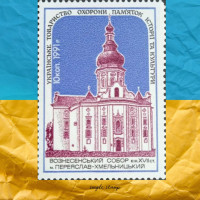
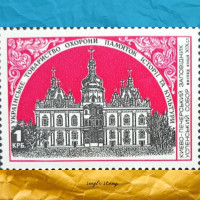
"Non-postage stamps UTOPIK of the Ukrainian Society for the Protection of Monuments of History and Culture."
The territory of Ukrainian lands after the war suffered significant destruction. This included both ordinary buildings, architectural masterpieces from previous years, and cultural heritage sites of the Ukrainian people. Within the framework of the new atheistic Soviet system, attention to such objects was insufficient. Publicly raised issues regarding the necessity of attention to restoration and restoration work were unsuccessful in the higher circles of the leadership of the Ukrainian SSR.
The
first impetus for change came from the Republican Conference on the
Conservation and Restoration of Architectural Monuments held on April 23, 1957.
As a result of the conference, there was an expression of the need to create a
single voluntary society for the protection of historical and cultural
monuments. Specialists from 80 countries participated, and as such, it could
not go unnoticed by the new government.
Preconditions for the creation of a civic organization
The issue of the
need to protect cultural monuments was first raised by figures in the fields of
culture and education immediately after the end of the war in 1946. The main
proposal to solve this issue was the need to involve a broad cross-section of
society, and to do this through the creation of a corresponding organization.
However, the main obstacle was the absence of similar structures at the
all-Union level, so the issue remained unresolved for another 10 years.
The basis for the
development of the government resolution "On improving the preservation of
cultural monuments in the territory of the Ukrainian SSR" was the
conference with international cultural experts held in Kyiv in 1957. The document,
approved by the government in 1958, provided for a number of corresponding
measures and organizational works. It is difficult to call them effective, as
the main instrument of implementation was the empowerment of associations of
architects and artists at the local level for independent maintenance of
cultural monuments.
In
1961, a request for the formation of an all-Ukrainian society for the
preservation of monuments was submitted to the government again, but as before,
it was not considered by the higher authorities. It was only after the
participation of the USSR in the international campaign for the preservation of
heritage in 1964 that conditions were created for the establishment of
voluntary societies for the preservation of historical and cultural monuments.
The foundation of UTOPIC
In the spring of
1965, art historian and architect H. Logvin published an announcement in the
newspaper Literary Ukraine about the creation of the Ukrainian Society for the
Protection of Historical and Cultural Monuments. Already on August 28, 1965, a
resolution was passed on the establishment of the Voluntary Society for the
Protection of Historical and Cultural Monuments. The organizing committee,
chaired by the director of the Institute of History of the Ukrainian SSR K.
Dubyna, included well-known Ukrainian scholars, writers, and artists.
The establishment of UTOPIC is considered to be December 21, 1966, after the founding congress of its participants. P. Tronko was elected as the head of the board at the beginning of 1967, who led the society for 23 years. In independent Ukraine, the activities of the organization continued under the chairmanship of the academician of the National Academy of Sciences of Ukraine P. Tolochko, who was replaced by Ph.D. in History M. Buryanova in 2015.
Activity of the Society for the Protection of Monuments of History and Culture
Over 60 years, the
Society has made a significant contribution to the preservation of Ukraine's
cultural heritage. It has participated in the identification, protection, and
preservation of many cultural monuments, and has facilitated the repair,
restoration, and renovation of well-known national objects as well as regional
landmarks. With the support of the organization, castles and fortresses,
architectural ensembles, and new monuments have been properly maintained.
During the Soviet
period, the Society helped save hundreds of churches and monastic complexes. In
1969, the Society created the Museum of Folk Architecture and Life of Ukraine,
which today holds national status. To create it, the organization invested 50
million karbovantsi and maintained it until 1993.
Each year, the
Society allocated over 10 million karbovantsi for repair and restoration work.
For comparison, the state budget provided only 5-6 million karbovantsi for
these purposes. The main sources of these funds were membership fees from
Society participants and collective contributions from enterprises, collective
farms, institutes, and others.
In
the first year of its existence, the society recruited 2 million people who
expressed a desire to become members. The society's popularity grew, especially
against the backdrop of Soviet totalitarianism and the persecution of
everything nationally. As of 1969, the number of members was 9 million, and 20
years later it was almost 20 million.
Issues of non-postage stamps of the UTOPIC series
In the days of the Ukrainian SSR, the post office played
an important role, as it was the main communication and link not only between
government agencies but also among ordinary people. At that time, the
collecting hobby was actively spreading among the Soviet population. The main
topics were numismatics, philately, and faleristics. However, people also
collected all sorts of stickers, matchboxes, postcards, calendars, or specific
netsuke in general.
First issues of non-postage stamps in 1964 and 1971.
The idea of
creating non-postal stamps was first implemented in 1964 with the release of
stamps with denominations of 10, 15, and 30 kopecks. The single-color
(depending on the denomination) stamp had a sticky side and perforations along
the edges. It featured a portico and an obelisk, with the denomination
indicated at the bottom and the affiliation to the Ukrainian SSR at the top.
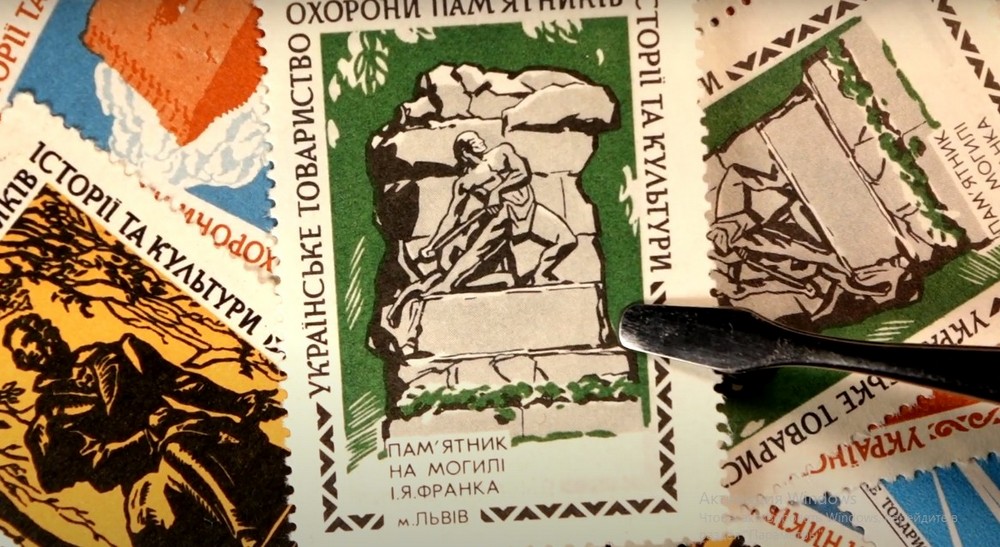
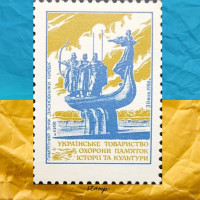
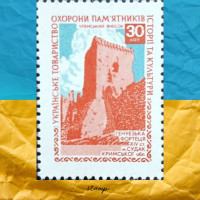
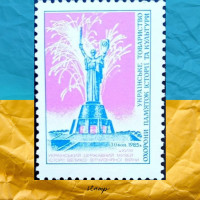
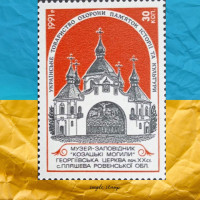
Recognizing the merit of the idea, the society decided to continue issuing stamps, which was realized in 1971 with a more detailed development of a series of non-postal stamps. Various monuments of history and culture served as the sketches for the second series of stamps. In addition to their image on the stamp, information was included about their name, location, and the purpose of the payment – entrance fee, membership fee, and the fund for the protection of monuments. The stamp was named after its affiliation to the "Ukrainian Society for the Preservation of Monuments of History and Culture." The stamps were printed in two or three colors on white paper with a sticky side.
Currently, there is information about the release of five stamps in the second series, which included:
• Ostrich Castle, with a denomination of 15 kopecks;
• Monument
"Legendary Tachanka," with a denomination of 10 kopecks;
• Monument on the
grave of T.H. Shevchenko, with a denomination of 30 kopecks;
• Monument to V.I.
Lenin, with a denomination of 50 kopecks;
• Sofia Cathedral,
with a denomination of 1 karbovanets.
There may have been
other stamps and denominations, but it is difficult to evaluate the entire
series and the print run due to the lack of official information from UTOPIC.
Regular stamp issues after 1974
The previous release was considered successful, and the society decided to continue printing non-postal stamps to collect contributions and encourage people to join. Three years later, in 1974, a new third series of non-postal stamps was released, consisting of over 45 stamps with denominations ranging from 15 kopecks to 1 karbovanets. This time, paper without a sticky side was used, and the denomination and the name of the purpose of the payment were printed on the back. The stamps were issued in several print runs and differed in the paper used and the shades of ink.
Further releases
were expected to feature the denomination on the front side of the stamp. The following
series were released:
·
Fourth release in 1978 with denominations of 10 and 30 kopeks, known for 4
stamps.
·
Fifth release in 1979 with denominations of 10, 15, and 30 kopeks, known
for 9 stamps.
·
Sixth release in 1985 with denominations of 50 kopeks and 1 ruble, known
for 3 stamps.
·
Seventh release in 1985 with denominations of 10 and 30 kopeks, known for 2
stamps.
·
Eighth release in 1986 with denominations of 10 and 30 kopeks, known for 2
stamps.
·
Ninth release in 1987 with denominations of 10 and 30 kopeks, known for 2
stamps.
·
Tenth release in 1988 with denominations of 10 and 30 kopeks, known for 2
stamps.
·
Eleventh release in 1989 with denominations of 10 and 30 kopeks, known for
2 stamps.
·
Twelfth release in 1990 with denominations of 10 and 30 kopeks, known for 2
stamps.
·
Thirteenth release in 1991 with denominations of 10 and 30 kopeks and 1
ruble, known for 3 stamps.
·
Fourteenth release in 1992 with denominations of 10 and 30 kopeks and 1
ruble, known for 4 stamps.
Analyzing all the releases allows us to draw conclusions about the work of several artists on the designs of the stamps. Certain releases have differences in the stylistic approach of the artwork. All the images depicted on the stamps can be divided into monuments and memorials, religious buildings and icons, castles and fortresses. Some monuments are repeated on stamps from different releases.
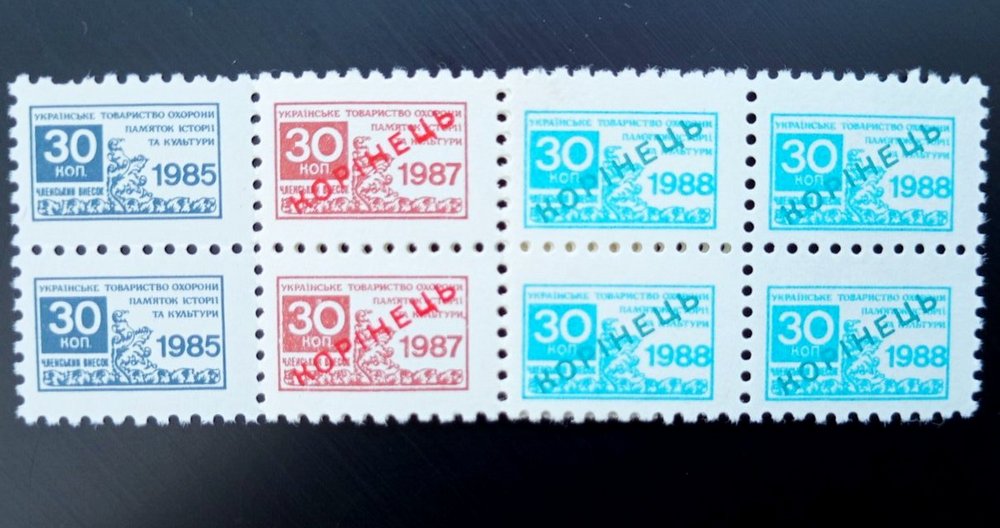
Additional releases in the form of control stamps:
In the period from
1985 to 1989, stamps were also released as control stamps that certified the
payment of membership fees. They were affixed to the member's card and came in
denominations of 10 and 30 kopeks. They were horizontal stamps measuring
14.5x8.5 mm, featuring the name of the UTOPIC society, the denomination and
year of release, as well as a visible membership fee. The word
"korinets" was printed diagonally across the stamp, and the stamp was
decorated with a small floral ornament. Red and blue inks of different shades
were used for printing.
Related Products
Monument of Independence postage stamp
Postage stamp "Independence Monument Kyiv"The issue of independence is very important for the Ukrainian people, as the struggle for independence continues to this day. History describes many period..
$1.20
Related Articles
Tragedies of Ukrainians in Ukrainian philately
1918 or 1992 in the independent state can be considered as a year of formation of Ukrainian philately. During the 30-year period, many new stamps were issued on various subjects. Each new year signi..
Nation code - stamps with embroidery of Ukrainian regions.
Fragment of the exposition of the Ivan Honchar Museum..